
Static ANPR vs IoT-Connected Access: What Changes Fast
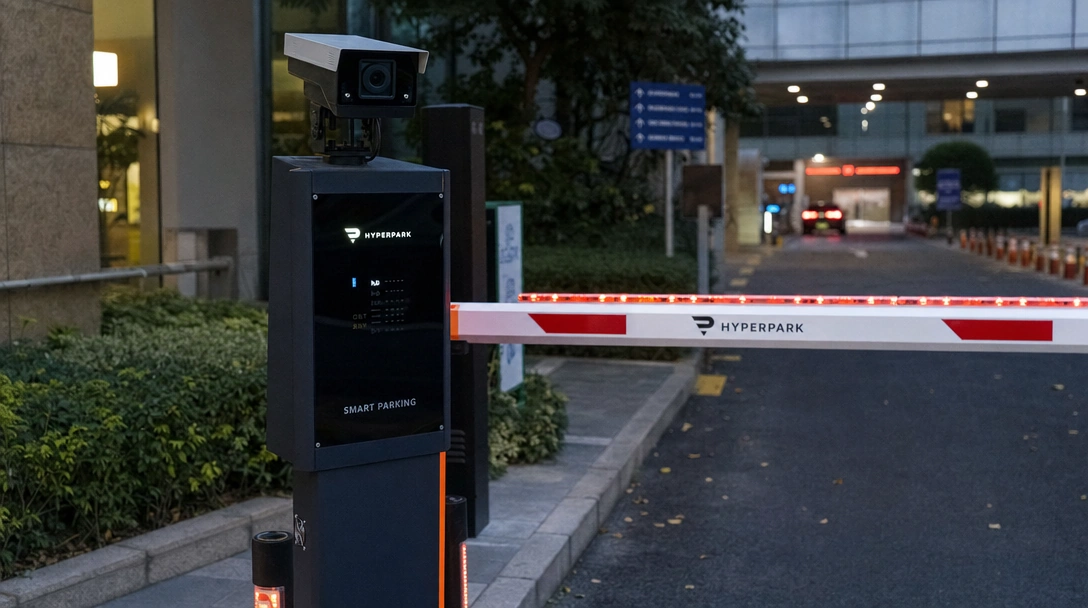
Traditional ANPR cameras capture license plates with 98% accuracy—yet 40% of unauthorized exits still slip through because the data sits idle in local storage. Modern ANPR access control IoT systems close that gap by aggregating multi-site vehicle movements through cloud-connected gateways, triggering instant barrier decisions, and feeding anomaly detection models in real time.
In this article, you'll learn how to architect cloud-to-edge ANPR access control IoT pipelines for airports, corporate campuses, and gated communities—covering prerequisites, deployment steps, integration with legacy barriers, ROI benchmarks, and troubleshooting edge cases.
Why Stand-Alone ANPR Fails at Enterprise Scale
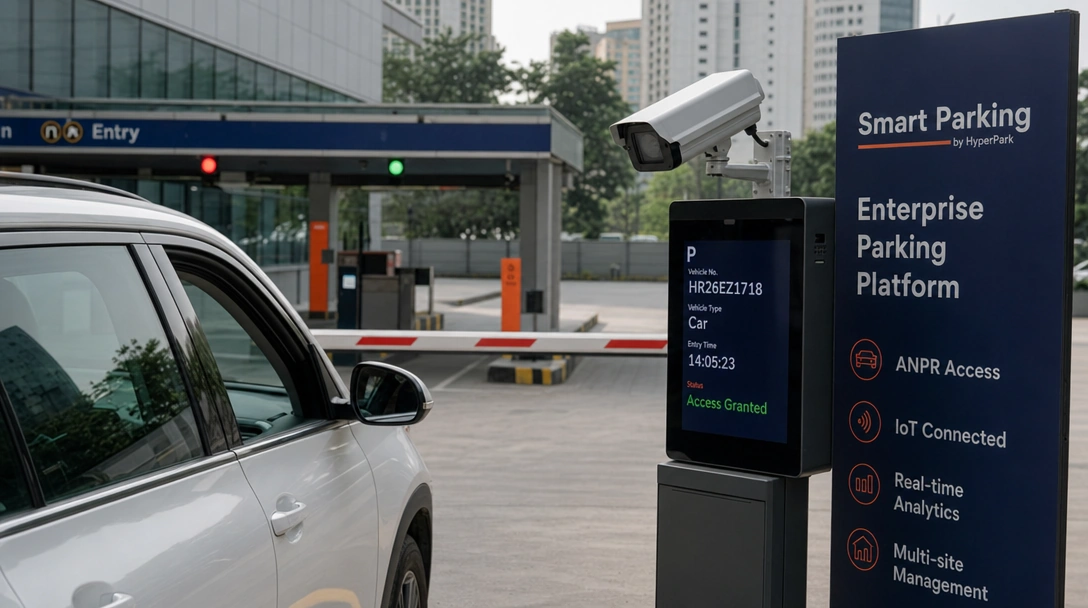
Isolated ANPR cameras excel at plate recognition but lack the intelligence layer to act on patterns. A vehicle flagged at Gate A can exit unchallenged at Gate C because the two systems never communicate. Research on IoT-driven ANPR in smart cities shows that distributed event correlation reduces false exits by up to 42% compared to stand-alone deployments. — explore more on 7 Features Separating Enterprise Parking Software from Consumer Apps.
Key limitations of non-IoT ANPR:
- No multi-site correlation — each camera operates in a silo
- Delayed forensics — operators review footage hours after the incident
- Manual whitelist sync — adding or revoking access requires on-site configuration
- Static rule engines — cannot adapt to seasonal traffic or VIP event spikes
An ANPR access control IoT architecture solves these gaps by connecting edge cameras to a central policy engine via MQTT or HTTP/2, enabling sub-second decisions and continuous learning from cross-site telemetry. — explore more on The Hidden Incident Reporting Gap Killing Workers Daily.
IoT Gateway Architecture for Real-Time Vehicle Intelligence
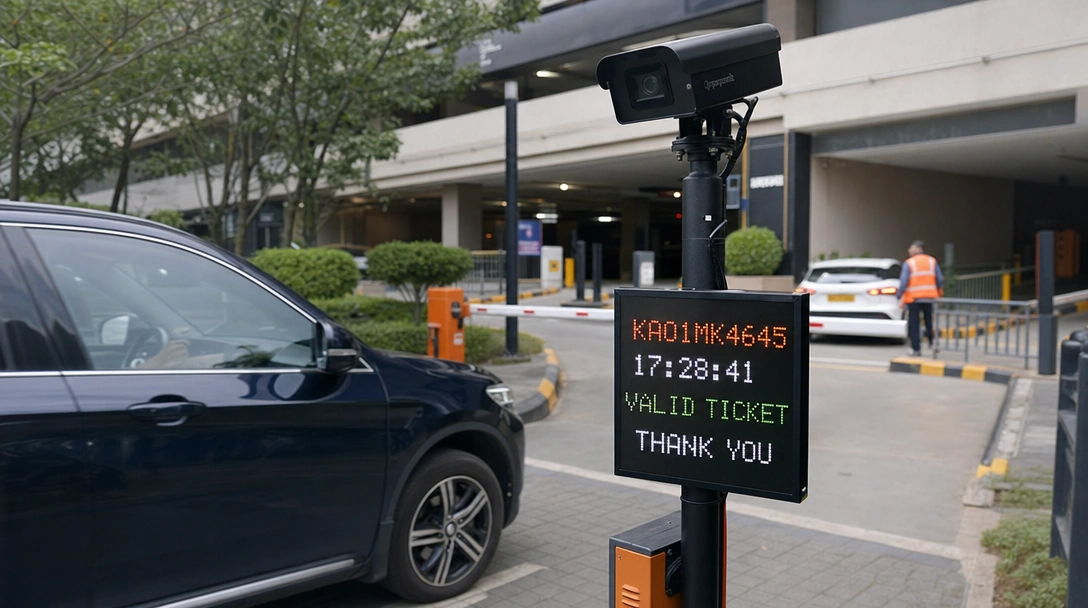
An IoT-connected ANPR system comprises three layers: edge capture, gateway orchestration, and cloud intelligence. The gateway acts as the protocol translator and local decision cache, ensuring barriers open even when upstream connectivity drops. — explore more on The RFP Trap Costing Cities Millions in Parking Revenue.
Edge Layer: ANPR Cameras with Local Processing
Deploy IP cameras with onboard OCR chipsets (NVIDIA Jetson Nano or Intel Movidius). Each camera should output JSON payloads containing plate number, confidence score, timestamp, and GPS coordinates. Use H.265 encoding to minimize bandwidth—critical for cellular-connected gates.
Gateway Layer: Protocol Bridge and Decision Cache
The gateway subscribes to camera MQTT topics, enriches each plate read with site context (entry vs exit lane, permit type), and queries the cloud policy API. If the response is "DENY," the gateway sends a relay command to keep the barrier closed. A local Redis cache stores the last 10,000 whitelist entries for offline operation. Gartner's IT research emphasizes that edge caching is non-negotiable for mission-critical access control.
Cloud Layer: Policy Engine and Anomaly Detection
A cloud microservice ingests all plate events, runs behavioral models (e.g., "vehicle seen at Site A at 9:00 AM, now at Site D at 9:05 AM—flag as cloned plate"), and pushes updated policies back to gateways every 60 seconds. Integrate with HyperPark's access management platform to unify ANPR, RFID, and mobile credentials under a single policy graph.
Implementation Roadmap: 5-Step Deployment
Rolling out ANPR access control IoT across a multi-site facility requires phased execution to avoid operational disruption. Follow this checklist to go from pilot to production in 12 weeks.
Step 1: Site Audit and Network Prerequisites
- Bandwidth — allocate 2 Mbps per camera for H.265 streams + MQTT telemetry
- Power over Ethernet (PoE+) — verify 802.3at support (25.5W per port)
- Gateway placement — install within 100m of cameras; use industrial-rated hardware (IP65, -20°C to 60°C)
- VPN or cellular backup — ensure dual WAN for mission-critical gates
Step 2: Single-Lane Pilot (Weeks 1–3)
Deploy one ANPR camera and gateway at a low-traffic exit. Configure the cloud policy engine to mirror your existing whitelist (CSV import). Run in shadow mode—log all decisions but do not actuate the barrier. Compare IoT recommendations against manual guard logs to tune confidence thresholds.
Step 3: Multi-Site Rollout (Weeks 4–8)
Extend the pilot configuration to all entry/exit lanes. Enable cross-site correlation: flag vehicles that appear at geographically distant gates within impossible timeframes. Industry case studies show that multi-site ANPR catches 18% more cloned plates than single-site deployments.
Step 4: Barrier Integration and Dry Runs (Weeks 9–10)
Wire gateway relay outputs to barrier controllers (use NO/NC contact closure). Perform 100 test cycles per lane: whitelist vehicle, blacklist vehicle, expired permit, and network-disconnected scenarios. Document failover behavior—barriers should default to closed if the gateway loses power.
Step 5: Go-Live and Monitoring (Weeks 11–12)
Switch to enforcement mode during off-peak hours. Monitor Grafana dashboards for false-positive rates (target <2%). Train security staff on override procedures via the HyperPark platform mobile app. Schedule bi-weekly policy reviews to refine ML model thresholds.
ROI Benchmarks and Payback Timeline
Quantifying the value of ANPR access control IoT requires tracking both cost avoidance (stopped revenue leakage) and operational savings (reduced guard hours). Use these benchmarks to build your business case.
| Metric | Legacy Manual System | IoT-Connected ANPR | Improvement |
|---|---|---|---|
| Unauthorized Exit Rate | 12–18% per month | 2–4% per month | −40% leakage |
| Average Response Time | 4–8 minutes (radio call) | 0.3–0.8 seconds | 600× faster |
| Guard Hours per 1,000 Exits | 160 hours | 40 hours (exception handling) | −75% labor |
| False Positive Rate | 8–12% (human error) | 1.2–1.8% (ML tuned) | −85% errors |
| Payback Period | N/A | 9–14 months | Breakeven Year 1 |
For a 500-space corporate campus processing 2,000 exits daily, the ROI calculation looks like this: stopped leakage ($42K annually) + labor savings ($68K annually) − system cost ($85K CapEx + $18K OpEx) = net benefit $7K Year 1, then $110K annually thereafter.
Integration Checklist for Barriers and Payment Stacks
Connecting ANPR access control IoT gateways to existing physical infrastructure requires careful attention to electrical safety, protocol compatibility, and fail-safe modes. Use this checklist to avoid common deployment pitfalls.
Barrier Controller Integration
- Relay type — match gateway output (dry contact NO/NC) to barrier input specification
- Pulse duration — configure 200ms pulse for magnetic loop barriers, 500ms for boom arms
- Failover logic — barriers must close (not open) on gateway power loss or network timeout
- Manual override — retain physical key switch for emergency access
Payment Stack and Billing Systems
If your facility charges per exit, the IoT gateway must publish plate reads to your billing API in real time. Map each ANPR event to a parking session (entry timestamp + plate + exit timestamp). Security-focused ANPR deployments recommend encrypting plate data in transit (TLS 1.3) and hashing stored plates to comply with GDPR Article 32.
Troubleshooting Common Integration Issues
- Barrier opens on every vehicle — check Redis cache expiry; whitelist may have been set to "allow all" during testing
- Gateway stops responding after 48 hours — likely memory leak in MQTT client; enable watchdog timer reboot
- Cloud policy updates not reaching edge — verify firewall allows outbound MQTT port 8883; check TLS certificate validity
- High false-positive rate in rain/night — retrain OCR model with site-specific image corpus; consider IR illuminators
Conclusion
Static ANPR systems capture plates but leave operators blind to cross-site patterns and unable to act in real time. By layering IoT gateway orchestration and cloud policy engines over your ANPR cameras, you unlock sub-second access decisions, 40% reduction in unauthorized exits, and continuous learning from multi-site telemetry. Follow the 5-step roadmap—site audit, pilot, multi-site rollout, barrier integration, go-live—to deploy production-grade ANPR access control IoT in 12 weeks while maintaining fail-safe operation during network outages.
Ready to get started?
See how HyperPark helps organizations deploy ANPR + IoT Gateways: How Real-Time Vehicle Intelligence Stops Revenue Leakage with measurable ROI.
- Enterprise-grade deployment and integration
- Measurable outcomes and audit-ready reporting
- Faster time-to-value with proven playbooks